

Four thousand fewer Americans are dying every month from fentanyl overdoses than were dying in 2023. While most of the drop occurred before 2025, provisional data suggests that deaths continued to fall last year.
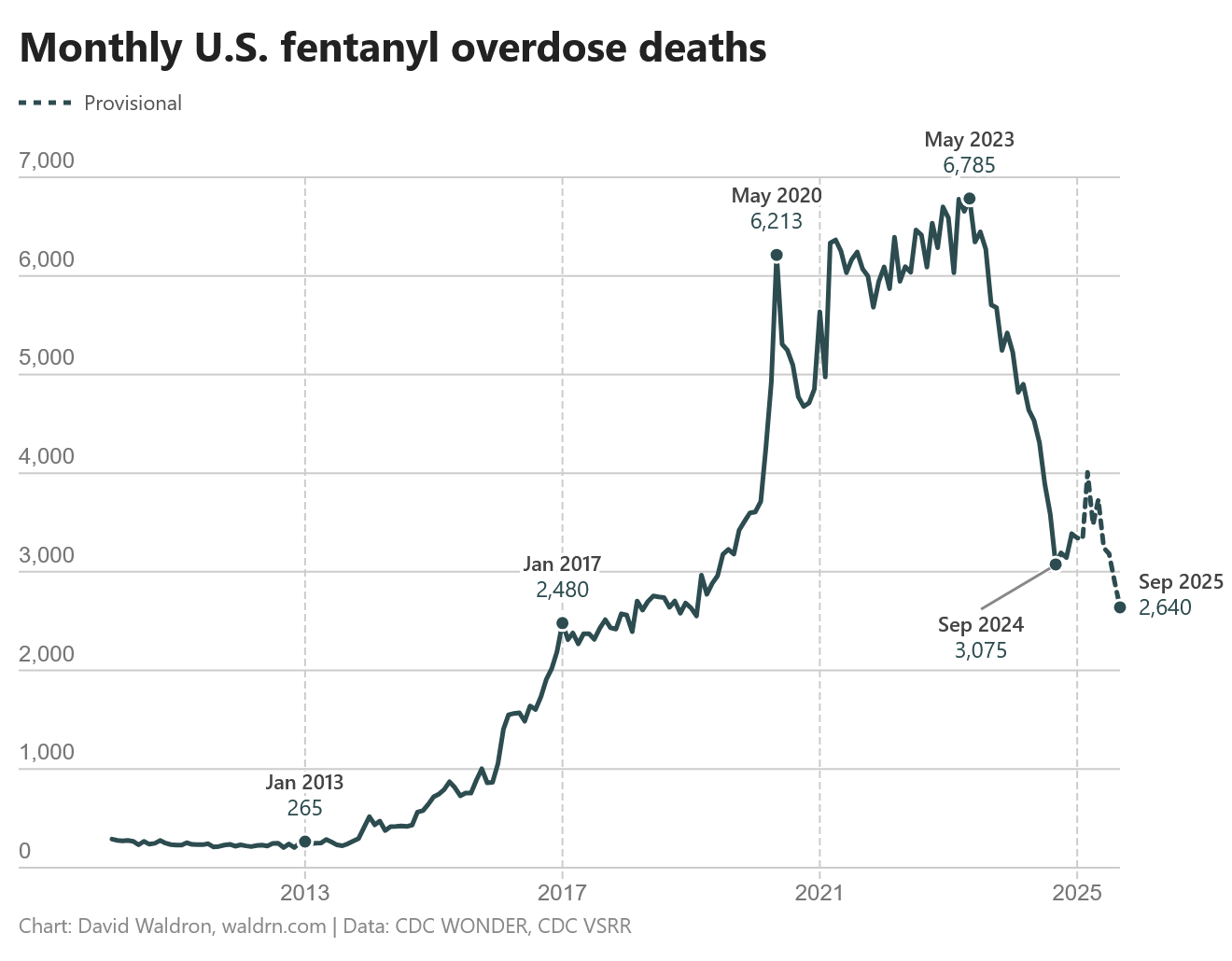
Prior to 2013, monthly synthetic opioid deaths averaged just a couple hundred a month. But in the years that followed, deaths increased sharply to nearly 7,000 at the peak in mid-2023. Then, suddenly, they started to plummet. By late 2024, monthly deaths had more than halved. As of September 2025, the most recent month for which data can be estimated, deaths have fallen to around 2,600, a drop of more than 60% from the peak.
This has not gone entirely unnoticed. In January, a study in Science documented a supply shock in the illicit fentanyl market: declining purity in seized drugs, fewer seizures overall, and even complaints on social media about fentanyl becoming harder to find. The decline showed up simultaneously in Canada, ruling out US-specific explanations like changes in policing or treatment access.
The most likely cause, according to the study, is that China cracked down on exports of fentanyl precursor chemicals, the raw ingredients that Mexican cartels use to manufacture the drug. That crackdown came out of sustained diplomatic pressure from the Biden administration, culminating in a formal agreement at the Biden-Xi summit in November 2023. As Jeffrey Prescott of the Carnegie Endowment wrote, “Foreign policy outcomes can be hard to measure. This one isn’t.”
The chart above extends through September 2025, using CDC provisional data adjusted for reporting lags. What the extra months reveal is that the decline has continued. The annualized death toll from synthetic opioids is now around 32,000, down from over 75,000 at the peak. To put that in perspective, a drop of over 40,000 annual deaths is comparable to the number of Americans who die annually in car accidents.
Whether this continues is an open question. The diplomatic arrangement that appears to have driven the decline is fragile. It depends on Chinese cooperation that could be withdrawn, and on a precursor supply chain that cartels may eventually route around. But for now, the data suggests one of the largest public policy successes since the development of the COVID-19 vaccines in 2020.